
Automated checks This plan went on the timetable after its content and sources passed the studio's automated checks on Thursday 5 November 2026. Before you start
From the studio's plan file
- Plan credited to
- UniPilates, with no writer named
- What backs it
- 6 sources in the reading list
Running order
Set 1 of 6
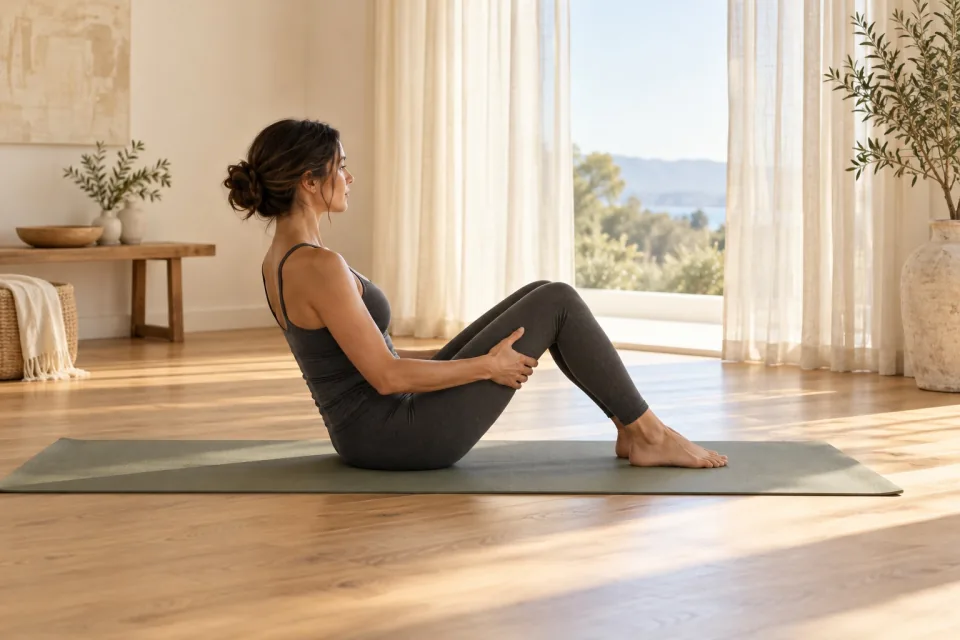
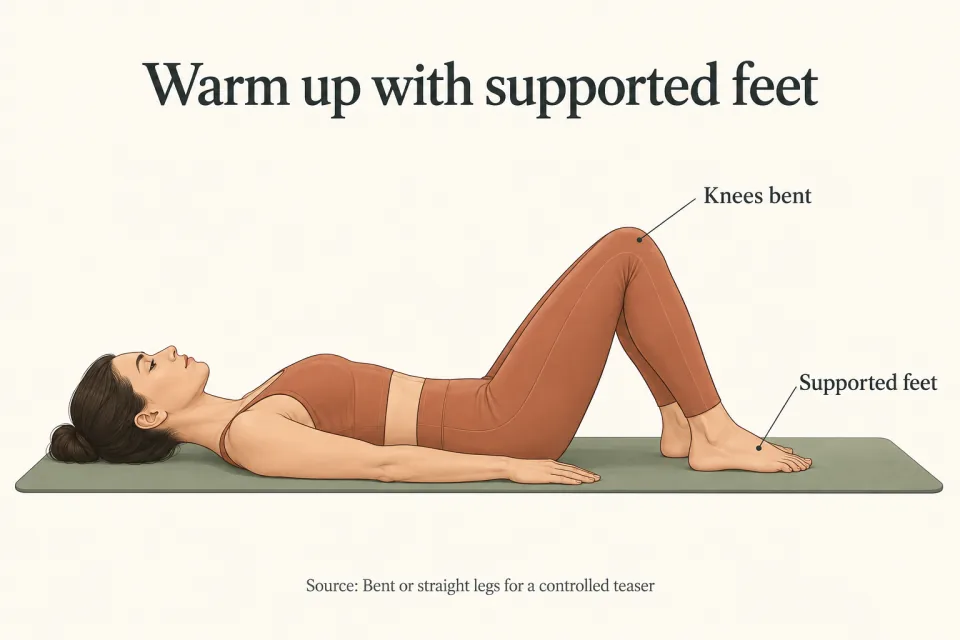
Warm up with supported feet
- 01
- Practise Teaser with bent and straight legs, giving the return to the mat as much attention as the lift. Begin with supported feet, then compare leg positions while keeping the movement slow.
- 02
- Sit with your knees bent and your feet together on the mat. Hold behind your legs and arrange your hands where you can keep that support as you begin to roll back. This opening set uses the seated start and support behind the legs described in Do a Better Teaser.
- 03
- Keep your feet resting on the mat as you begin the backward movement. Let the knees remain together, and follow the movement of your trunk rather than preparing to lift the feet. The task here is the supported roll back; leave the leg extension for the next set.
- 04
- Roll back slowly while holding behind your legs. Choose an endpoint from which you can reverse the movement at the same pace, rather than making the backward movement larger on each attempt. Keep your attention on how you return to sitting from that endpoint.
- 05
- Come back toward sitting with your feet still supported. Allow your hands to stay behind your legs throughout this movement, so you are comparing the outward and returning phases under the same arrangement. Finish the return before changing either your hand position or your feet.
- 06
- Reach your arms forward when you are ready to practise without holding behind the legs. Keep the feet down and repeat the same small roll back, using the earlier endpoint as your reference. Compare the movement with your supported version before choosing a larger range.
- 07
- Return to sitting without adding a separate forward thrust of the head. Keep the head following the line of the spine, as in the Teaser instructions from Limitless Pilates. Let the trunk complete the movement rather than reaching your face toward your knees.
- 08
- Stay with this supported stage while you settle on a slow pace. Hayne recommends becoming comfortable with the current variation before progressing. Use that instruction throughout the class: the next leg position is an option to explore after the present movement feels familiar.
Set 2 of 6
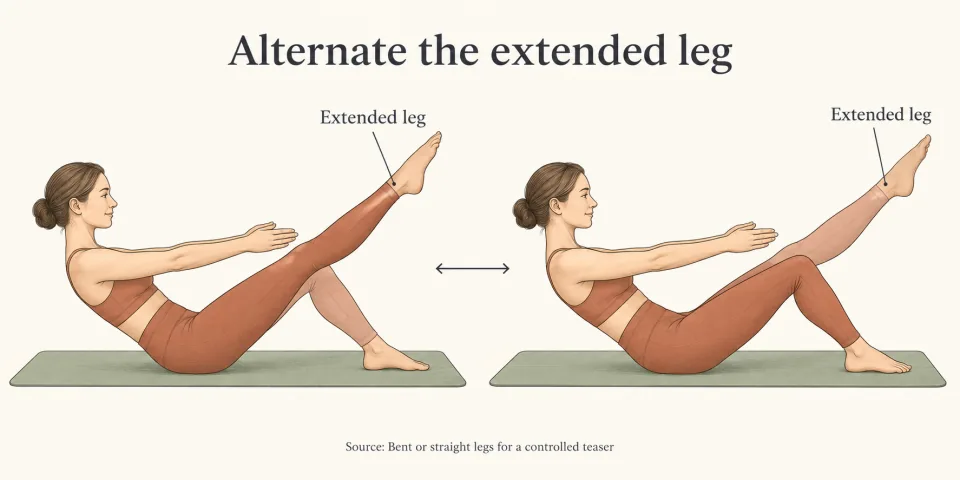
Alternate the extended leg
- 09
- Extend a lifted leg while the other foot stays on the mat, then change sides. Hayne places alternating leg extensions between the supported-foot stage and the version with the legs in tabletop.
- 10
- Begin seated with your knees bent and your hands behind your legs. Lift the foot you intend to extend, leaving the opposite foot supported. Complete the lift before straightening the knee, so the change of leg position has a clear beginning and end.
- 11
- Straighten the lifted leg while keeping the opposite foot where it started. Watch the relationship between your thigh and your trunk as you do this. Make the knee extension the movement you are practising, rather than combining it immediately with a deeper roll back.
- 12
- Bend the lifted knee again if you want to compare the positions from the same seated start. Bending the knees makes the leg lever shorter. Notice the change in the arrangement of the leg, then decide which shape you will keep during the following roll back.
- 13
- Roll your trunk back with the chosen leg position established. Keep the supported foot on the mat and use the same slow pace as in the warm-up. Follow the descent itself, including the point where you decide to reverse it, rather than judging the attempt only by the height of the lifted foot.
- 14
- Return toward sitting with the leg still in its chosen shape. If you began with the knee bent, finish with it bent; if you began with it extended, keep that arrangement through the return. This gives you a comparison of complete movements rather than a comparison of starting positions alone.
- 15
- Lower the lifted foot to the mat before changing sides. Settle into the seated start again, then extend the other lifted leg and repeat the same movement task. Compare the roll back and the return separately, without assuming that the leg position you chose earlier must be your choice on this side.
- 16
- Bring your feet back together on the mat to finish the set. Choose whether to continue with supported feet or try the bent-knee balance next. Base that class choice on the movement you have just completed, including the return, rather than on whether you briefly held an extended leg.
Set 3 of 6
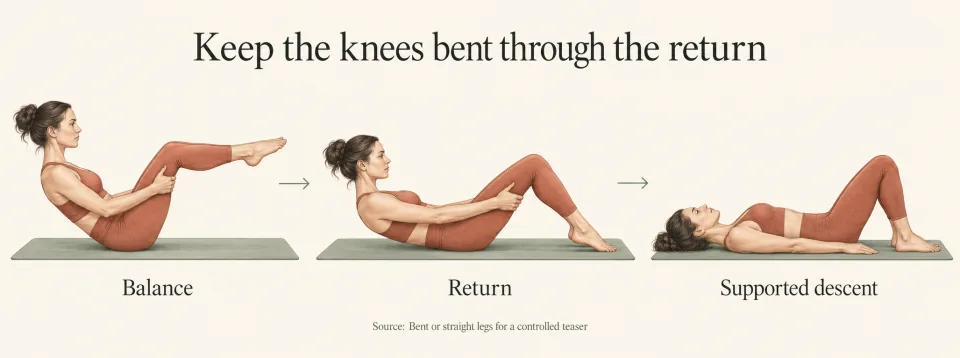
Keep the knees bent through the return
- 17
- Keep your knees bent for the whole Teaser movement, including the descent. Settle into the seated start, hold behind your legs and lift your feet into the bent-knee position before changing the support from your hands.
- 18
- Find the balance slightly behind your sitting bones. Keep the knees bent while you explore that position, and leave the arms supported behind the legs at first. Once you have chosen your balance position, make the next change deliberately rather than releasing your hands as part of the same movement.
- 19
- Reach your arms forward and retain the bent-knee shape. Forward-reaching arms are a Teaser modification described by The Vibrancy Society. Use that arm position for this comparison, so you can concentrate on the knees and the return without also taking the arms toward the ceiling.
- 20
- Roll the trunk back while keeping the knees bent. Aim for an even movement along the sides of your body, following the precision cue in The Vibrancy Society's Teaser guidance. Observe the path of the trunk rather than turning the descent into a search for the mat with your feet.
- 21
- Return to the seated balance with the knees still bent. Let the head follow the spine, and finish the movement before adjusting your arms. Compare the shape at the end with the shape you chose at the start: the bent knees can remain part of the exercise throughout.
- 22
- Move to a lying start when you are ready to practise the lift from the mat. Arrange the bent legs in tabletop and take the arms overhead. Inhale as the arms move toward the ceiling, following the opening breath pattern described by Limitless Pilates.
- 23
- Exhale to curl the head and shoulders and lift the spine in sequence toward Teaser. Keep your chosen knee bend as you reach the arms forward. Complete the lift before deciding whether to change the legs; for this set, let the bent position remain the shape you compare on the way down.
- 24
- Exhale to begin the return, tipping the pelvis toward the ceiling and rolling the spine down. Keep the knees bent as the trunk descends. Hayne describes the lowering phase as muscular work that controls the spine's return to the mat.
Set 4 of 6
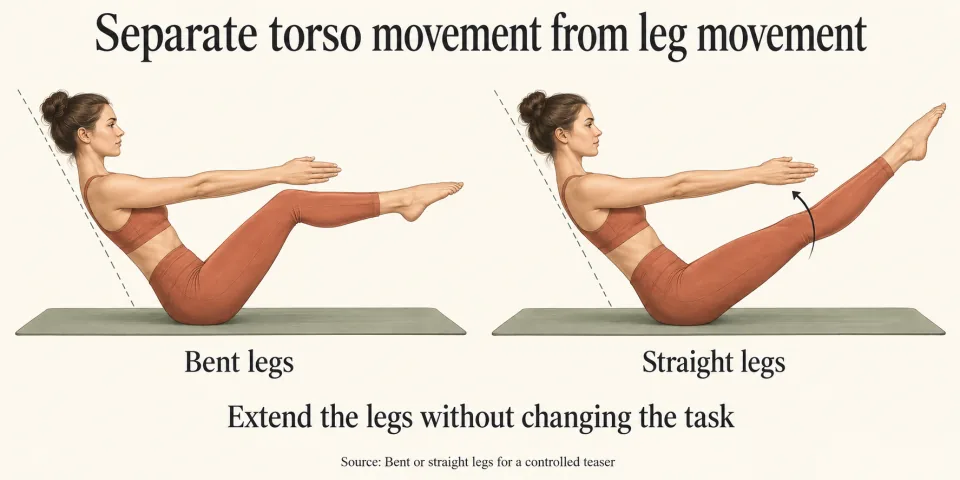
Extend the legs without changing the task
- 25
- Try the extended-leg Teaser from the same seated balance and with the arms still reaching forward. Establish the bent-knee position first, then straighten the legs as a separate movement before beginning the roll back.
- 26
- Extend the knees to the position you can maintain for the movement you intend to practise. Hamstring flexibility affects the ability to straighten the legs in Teaser. Keep that distinction in mind when choosing your shape: the class comparison concerns how you move through it, including how you return.
- 27
- Reach the legs away while keeping your arm position unchanged. Changing how far the limbs reach changes the exercise demand without adding external weight. Make this a comparison of leg positions by leaving the arms forward, rather than lengthening the reach of the arms at the same time.
- 28
- Settle into the extended-leg balance before moving the trunk. Body proportions influence how the same Pilates exercise's lever arrangement feels for different people. Use your own bent-knee version as the reference for this set, with attention to the pace and path you have already practised.
- 29
- Roll the trunk down while the legs remain lifted if that is the movement you chose in the preceding set. Keep this same arrangement when comparing bent and straight knees. Lowering the legs with the trunk would be a different movement task, which you will explore separately in the next set.
- 30
- Return toward the balance with the legs in the selected position. Keep the forward reach of the arms and let the head follow the spine. Observe whether you keep the pace you intended through the whole return, including the approach to the seated balance, rather than focusing only on the middle of the movement.
- 31
- Bend the knees before another attempt if you choose to shorten the leg lever. Establish the bend while you are supported or balanced, then begin the movement again. Keep this adjustment separate from the descent so you can tell which leg position you used for the complete attempt.
- 32
- Finish by returning to the mat with a planned leg movement. The return described by Limitless Pilates bends the legs back into tabletop as the spine rolls down. Use that bent-leg return when it is the version you have selected, and distinguish it from keeping the legs extended throughout.
Set 5 of 6
Separate torso movement from leg movement
- 33
- Choose which part of Teaser will move before you begin: the trunk, the legs, or the trunk and legs together. Establish your selected knee position first, then practise that movement pattern without adding another change halfway through.
- 34
- Hold the legs lifted while you roll the trunk down and back up. This is the torso-moving variation described by The Vibrancy Society. Keep your attention on the trunk's path, using the legs as the position you intend to maintain throughout the movement.
- 35
- Repeat that torso movement with bent knees if you want to compare it with the extended-leg version. Keep the forward-reaching arms and the same intended pace. Compare the descent with the descent and the lift with the lift, rather than comparing a bent-knee balance with a straight-leg roll down.
- 36
- Keep the trunk lifted for the next movement and lower the legs, then raise them again. Let the trunk remain in the established Teaser balance as you follow the legs' path. Complete this leg movement before deciding whether to add a simultaneous movement of the trunk.
- 37
- Return the legs to their starting position and settle into the balance. If you want to change the knee bend, make that change now, before beginning another lowering movement. Keep the choice explicit: bent knees for the whole leg movement, or extended legs for the whole leg movement.
- 38
- Lower the trunk and legs together only when that is the pattern you have chosen. In Forde's simultaneous descent, the legs reach the mat alongside the shoulder blades, followed by the chest and head. Use those landing points to organise this version rather than bringing the feet down while trying to keep the trunk balanced.
- 39
- Practise the return with the breathing sequence described by Limitless Pilates when using its bent-leg descent. Begin on an exhalation, tip the pelvis toward the ceiling and roll down as the legs bend toward tabletop. Keep that sequence distinct from Forde's simultaneous landing pattern.
- 40
- Choose your next attempt by naming the movement to yourself before starting it. For example, choose bent knees with the trunk moving, or extended legs with the trunk and legs descending together. This class comparison combines leg position with choreography; changing either creates a different task to observe.
Set 6 of 6
Close with a supported descent
- 41
- Return to the seated Teaser preparation with your feet supported and your hands behind your legs. Use this closing set to revisit the slow roll back after exploring the different leg positions and movement patterns.
- 42
- Roll back with the feet remaining on the mat. Choose the same endpoint you used in the opening set, or a nearer endpoint if that is the movement you want to practise now. Keep the hands behind the legs and follow the trunk's descent from sitting to your chosen stopping place.
- 43
- Come back toward sitting without changing the support from your feet. Let the return finish before lifting a foot or releasing a hand. The closing movement is complete when you arrive at the seated position you selected, rather than when you begin preparing another version.
- 44
- Reach the arms forward if you want to revisit the supported-foot movement without the handhold. Keep the feet together and leave the knees bent. Roll back with that arrangement, then return to sitting before deciding whether to use the handhold again for the final descent.
- 45
- Choose the knee position for a final Teaser return while you are still supported. Bent knees can stay bent throughout; an extended-leg start can also lead into the bent-leg return described by Limitless Pilates. Decide which sequence you are practising before leaving the seated position.
- 46
- Begin the descent slowly and follow the sequence you chose. If the legs are staying lifted, keep that task separate from lowering them with the trunk. If the legs are bending toward tabletop, let the bend belong to the planned return rather than introducing an unplanned change of choreography.
- 47
- Finish the roll down evenly along the sides of the body and allow the head to settle after the trunk. End the class on the mat. Keep your next practice choice specific: the leg shape, arm position and return pattern you want to repeat, with the same attention to the descent as to the lift.